Installation
NEMA 14-50 vs. Hardwired EV Charger: Texas Guide
Installation
How we research. We do not run a charger lab. Each guide is built from manufacturer datasheets, official utility, city and state pages, hands-on reviews from outlets that do test, and long-running owner threads — all linked in the sources list. We may earn a commission if you buy through links on this page. See our affiliate disclosure.
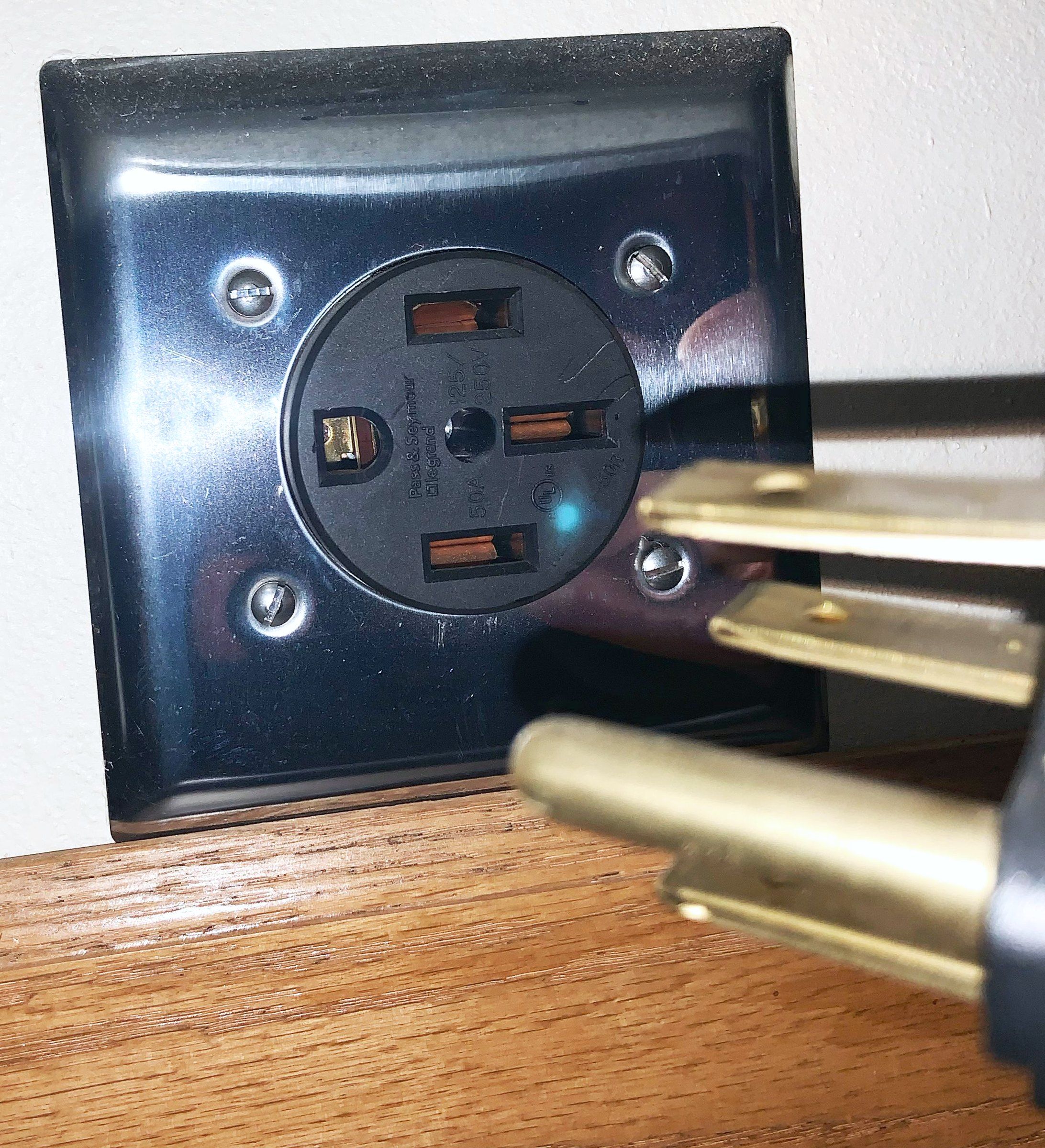
The NEMA 14-50 vs. hardwired EV charger question looks like a convenience choice: a plug you can unplug versus a box screwed to the wall. Under the National Electrical Code that Texas uses, it is really a choice about charging speed, a breaker that may nuisance-trip, and a plug joint that can overheat. Here is how it plays out.
| NEMA 14-50 plug-in | Hardwired | |
|---|---|---|
| Max continuous charging | 40 A (~9.6 kW) on a 50 A circuit | Up to 48 A (~11.5 kW) on a 60 A circuit |
| GFCI breaker for EV receptacle | Required (NEC 625.54) | Usually not for indoor installs (per Qmerit) |
| Typical extra part | 50 A two-pole GFCI breaker, ~$130 retail | — |
| Installed cost (Fixr) | $1,000–$2,200 | $850–$1,800 |
| Move the charger later | Unplug it | Electrician disconnects it |
Sources: Qmerit (November 2026), Fixr via FeeGuides. Qmerit also reports that 48-amp chargers make up 70% of its own installations — a sign that most buyers who pay for an electrician end up hardwiring.
EV charging runs for hours, so the circuit counts as a continuous load and may only deliver 80% of its rating. On a 50 A circuit that is 40 A — about 9.6 kW at 240 volts. Emporia’s own documentation shows the same split for its Classic: 48 A hardwired, 40 A when it is on a NEMA 14-50 plug.
Is 40 amps enough? For most Texas drivers, yes. At 9.6 kW, a seven-hour overnight window delivers roughly 67 kWh — more than a full day of driving for almost anyone. Our Level 1 vs. Level 2 guide runs that math against real free-nights plan windows.
The NEC requires ground-fault protection on receptacles installed for EV charging (Section 625.54 in the edition Qmerit cites). In practice your electrician installs a two-pole GFCI breaker in the panel. Meanwhile, nearly every Level 2 charger already has its own ground-fault detection. Two protective devices watching the same circuit can disagree, and the breaker wins: it trips, often during an overnight session, and the car is not charged in the morning.
Qmerit notes that this is common enough that some charger makers, including Emporia, advise against using a GFCI breaker with their equipment — which is impossible to follow on a code-compliant receptacle install. Hardwiring sidesteps the conflict.
Texas has applied the 2023 NEC statewide since September 1, 2023 (TDLR), and Houston announced the same effective date for its permits. Older 14-50 outlets installed for a range or RV before then may not have GFCI protection — another reason to have an electrician look before you plug in a charger.
Owner threads on r/evcharging include repeated photos of burned NEMA 14-50 receptacles. The common causes discussed there and by installers are cheap receptacles not built for hours at 40 A, terminal screws not torqued to spec, and undersized or aluminum conductors. If you do go plug-in, Qmerit recommends an industrial-grade or EV-rated receptacle, and you should ask that terminals be torqued with a torque screwdriver.
Either way, the circuit and permit drive the price. See the Texas installation cost breakdown and permit guide.
For most new installs, hardwiring is the better choice: it is the only way to get 48 amps, avoids the GFCI breaker required for EV receptacles, and removes the plug-and-receptacle joint that can overheat. Choose a 14-50 only if you need to take the charger with you or want to use a portable charger.
EV charging is a continuous load, so a 50-amp circuit can deliver 80% of its rating: 40 amps, or about 9.6 kW at 240 volts.
Most Level 2 chargers have their own ground-fault protection, and stacking a GFCI breaker on top can cause nuisance trips. Qmerit notes that some charger makers, including Emporia, advise against a GFCI breaker with their equipment. Hardwiring usually removes the need for the breaker.
The Texas Department of Licensing and Regulation adopted the 2023 National Electrical Code, effective September 1, 2023. Your city inspector (the authority having jurisdiction) has the final say.
The Off-Peak Brief
Rebate funding changes, new free-nights plans, permit rule updates, and the occasional charger worth a look. One email a month. Unsubscribe anytime.
Signups are not open yet. If you would like a note when the list launches, email hello@evchargerstexas.com.
A one-page worksheet: panel capacity, circuit size, plug-in vs. hardwired, permit questions for your city, and the utility programs to enroll in.
The checklist will be included when the list opens.